Study
in Europe

When young students think about studying abroad, the traditional frontrunners – the United Kingdom, the United States, Australia, and Canada – tend to dominate the conversation. Yet in recent years, a quieter revolution in international higher education has been taking place across the continent of Europe.

Years of Experience
0 +
Visa Approval Rate
0 %
Students Guided
0 +
University Partners
0 +

Your Gateway to
World-Class Education

When young students think about studying abroad, the traditional frontrunners – the United Kingdom, the United States, Australia, and Canada – tend to dominate the conversation. Yet in recent years, a quieter revolution in international higher education has been taking place across the continent of Europe, and it is a revolution that Pakistani students can no longer afford to ignore. Europe offers a constellation of world-class universities, a remarkable diversity of cultures and languages, some of the most affordable study options available to international students anywhere in the world, and an increasingly seamless pathway to post-graduation employment across one of the planet’s largest and most sophisticated single markets. Europe is not a monolithic destination – it is a richly varied tapestry of nations, each with its own academic traditions, cultural identity, and professional opportunities. From the engineering powerhouse of Germany to the social innovation leadership of the Scandinavian nations, from the design and sustainability excellence of Sweden to the cutting-edge digital education ecosystem of Finland, the European continent offers Pakistani students a diversity of educational environments that is simply unmatched by any single alternative destination. The common thread running through all of these nations is a shared commitment to academic quality, research excellence, and the development of graduates who are genuinely equipped to compete and contribute in an interconnected, knowledge-driven global economy. Read More

Why Europe Is Rising as a
Priority for Pakistani Students

Several converging trends have combined to make Europe an increasingly compelling choice for Pakistani students in recent years. First and foremost is the dramatic expansion of English-medium programs at European universities. Once perceived as a barrier for non-European students, language is now far less of an obstacle than it once was. Hundreds of fully English-taught bachelor’s and master’s degree programs are now available at universities across Germany, Sweden, Finland, Norway, Denmark, and the Netherlands, enabling Pakistani students to pursue internationally recognized degrees without needing to learn a new language before they begin.

Germany

400+ Top-ranked universities with strong industry links and globally respected degrees in Technology, Business, and Sciences.

Scandinavia

Innovative learning across Norway, Denmark, and the Nordics with a focus on critical thinking, collaboration, and real-world skills.

Sweden

Home to globally ranked universities and a thriving tech ecosystem driving excellence in engineering, business, and sustainability.

Finland

World-leading education system focused on creativity, innovation, and interdisciplinary learning in technology and design.

Second is the question of cost. The financial burden of a Western education has grown significantly in recent decades, and for many Pakistani families the expense of studying in the United Kingdom or the United States has become genuinely prohibitive. European universities, by contrast, often charge tuition fees that are a fraction of those demanded by Anglo-American institutions – and in some countries, including Germany and Norway, public universities charge no tuition fees at all for international students. When the lower cost of living in many European cities is factored in, Europe offers a compelling case for Pakistani families seeking the best possible academic value for the investment in education.

Third is the quality of the academic and research environment. European universities – and particularly those in Germany, Scandinavia, Sweden, and Finland – are consistently ranked among the world’s very best. Institutions such as the Technical University of Munich, Heidelberg University, KTH Royal Institute of Technology, Aalto University, and the University of Helsinki are global leaders in engineering, technology, sustainability science, business, and the life sciences. The research culture at these institutions is characterized by intellectual rigor, industry partnership, and a commitment to solving real-world problems – exactly the kind of academic environment that produces graduates who are genuinely competitive on the international stage.

The European Academic Culture:
What Pakistani Students Should Expect

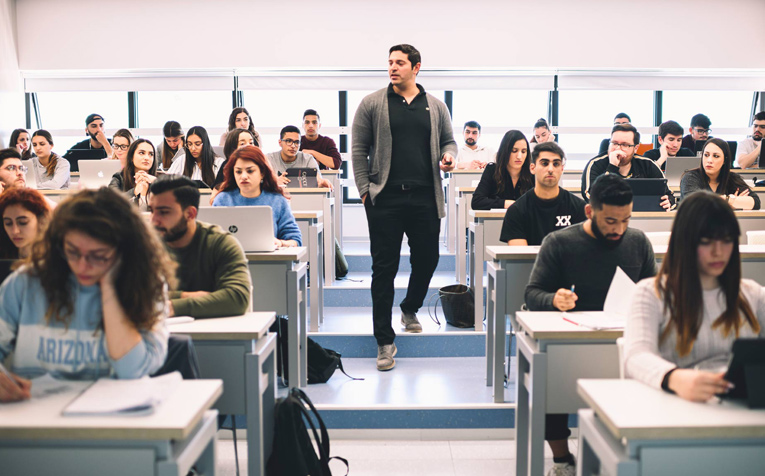
The academic culture of European universities is, in several important respects, quite different from what most Pakistani students will have experienced in their domestic education. European universities place a very high premium on independent learning, critical thinking, and self-directed research.

Students are expected to engage actively with their course material, to form and defend their own intellectual positions, and to contribute substantively to seminars and group discussions. The relationship between student and professor is more collaborative and less hierarchical than is often the case in Pakistani educational institutions, and students are generally encouraged to challenge ideas, question assumptions, and bring their own perspectives to bear on the subjects they study.

This pedagogical culture can require some initial adjustment for Pakistani students accustomed to more structured, lecture-based learning environments – but the adjustment is consistently described by Pakistani graduates of European universities as one of the most intellectually liberating and professionally developmental aspects of their education. The ability to think independently, argue persuasively, work collaboratively, and adapt quickly to new challenges are precisely the qualities that European and international employers most value, and European universities are remarkably effective at cultivating them.

European campuses are also among the most culturally diverse in the world, hosting students from every region of the globe. This diversity creates a genuinely international learning environment in which Pakistani students can build cross-cultural relationships, develop global professional networks, and develop the intercultural competencies that the modern workplace demands. Pakistani student communities are well-established at many European universities, particularly those with strong international student populations, providing a sense of community and cultural support that helps ease the transition to a new country and a new academic system.

Why Choosing Germany Is the Best Choice?

Germany

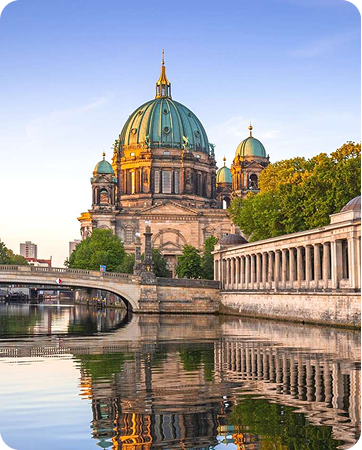
Germany is, by almost any measure, the most powerful and prestigious study destination in continental Europe. As the continent’s largest economy and one of the world’s leading exporters of technology, engineering, and manufactured goods, Germany combines academic excellence with an economic vitality that creates extraordinary opportunities for internationally educated graduates. For Pakistani students with ambitions in engineering, computer science, business, natural sciences, or the applied arts, Germany offers a study environment that is without peer in Europe. Germany is home to over 400+ state-recognized higher education institutions, including universities (Universitäten), universities of applied sciences (Fachhochschulen), and technical universities (Technische Universitäten). Institutions such as the Technical University of Munich (TUM), Ludwig Maximilian University of Munich (LMU), Heidelberg University, RWTH Aachen University, the University of Berlin (Humboldt and FU),

and the Karlsruhe Institute of Technology (KIT) are consistently ranked among the world’s top universities and are respected by employers, academic institutions, and professional bodies across every continent. Germany’s universities of applied sciences (UAS) deserve particular mention for Pakistani students. These institutions offer highly practical, industry-connected programs that combine rigorous academic training with mandatory professional placements, producing graduates who are exceptionally well-prepared for immediate employment. The UAS sector is particularly strong in engineering, information technology, business administration, and the social sciences, and its qualifications are fully recognized across the European Union and beyond.

Read More

Academic Excellence at Lower Costs

One of the most compelling features of the German higher education system for international students is its extraordinary affordability. Public universities in Germany charge no tuition fees for undergraduate programs – a policy that applies equally to international students, including those from Pakistan. This means that every student can earn a degree from one of the world’s great research universities, in one of Europe’s most advanced economies, while paying only a modest semester fee (typically between EUR 150 and EUR 350 per semester) that covers administrative costs and often includes a public transport pass. For Pakistani families for whom the cost of a Western education has seemed prohibitive, Germany represents a genuinely transformative opportunity. Even at the postgraduate level, some German public universities charge no or minimal tuition fees for international students, making Germany one of the most cost-effective options for Master’s and doctoral study available anywhere in the world. This combination of zero or near-zero tuition with world-class academic quality is, simply put, exceptional – and it is one of the primary reasons why Germany has become one of the world’s most popular destinations for international students.

Courses and Degrees Offered in English

While German remains the primary language of instruction at most German universities, the expansion of English-medium programs over the past decade has been substantial. There are now over 1500 fully English-taught degree programs available at German universities, spanning engineering, computer science, business administration, economics, natural sciences, social sciences, and more. The DAAD (Deutscher Akademischer Austauschdienst – the German Academic Exchange Service) maintains a comprehensive, searchable database of English-medium programs, making it straightforward for Pakistani students to identify programs that match their academic background and career aspirations without requiring German language proficiency. That said, students who are willing to invest in learning German – even at a basic level before arrival – will find that it significantly broadens their access to academic programs, social integration, and professional opportunities within Germany. Many universities offer free or subsidized German language courses to international students, and the effort invested in language acquisition is consistently rewarded in terms of both academic performance and employment prospects.

Affordable Living & Budget-Friendly Education

Germany’s cost of living, while not the lowest in Europe, is very manageable for international students, particularly in cities outside of Munich and Frankfurt. Cities such as Leipzig, Dresden, Cologne, Heidelberg, and Stuttgart offer excellent universities, vibrant student cultures, and living costs that compare favorably with major cities in the UK, Australia, or North America. A Pakistani student in Germany can typically live comfortably on EUR 700 to EUR 900 per month, covering accommodation, food, transport, health insurance, and personal expenses. Student dormitories (Studentenwohnheime), managed by the Studentenwerk (the student services organization), offer affordable accommodation in convenient locations near most university campuses. Germany’s robust public transport infrastructure, typically included in the semester fee, further reduces the cost of daily life for students. Discounts are widely available for students on cultural activities, museum admissions, and recreational facilities, and the strong student community culture in German university cities means that social life need not be expensive to be rich and rewarding.

Scholarships

Despite the absence of tuition fees, Germany offers a generous scholarship and funding support for international students. The DAAD Scholarship is the flagship program, offering full or partial funding for graduate and postgraduate students from developing countries, including Pakistan. The DAAD funds thousands of international students annually and is highly competitive – but Pakistani students with strong academic records and clearly articulated research interests are well-positioned to apply successfully. In addition to DAAD, foundations such as the Konrad Adenauer Foundation, the Heinrich Böll Foundation, and the Friedrich Ebert Foundation offer scholarships with specific academic and values-based criteria.

Internship & Industry Linkages

Germany’s economy is one of the most innovative and globally competitive in the world, and its universities maintain exceptionally strong connections to industry. The concept of the Fachhochschule (university of applied sciences) is built around mandatory industry placements, ensuring that UAS graduates possess direct professional experience alongside their academic qualifications. Research universities similarly maintain deep partnerships with leading German and international companies – including Siemens, BMW, Volkswagen, Bosch, SAP, Deutsche Bank, Bayer, and hundreds of others – that translate into internship placements, collaborative research projects, and graduate recruitment pipelines. For Pakistani students, gaining internship experience within Germany’s world-leading industrial and technology sectors is a professionally transformative opportunity that significantly enhances employability both in Germany and internationally.

Why Choosing Scandinavia Is the Best Choice?

SCANDINAVIA

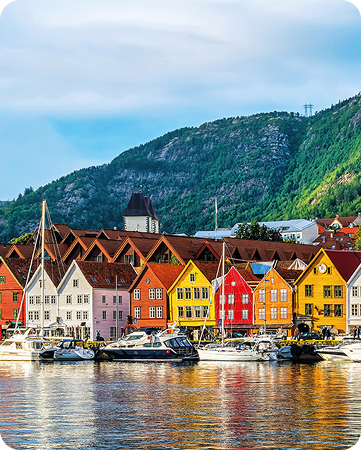
Scandinavia – encompassing Norway, Denmark, and, in broader usage, the wider Nordic region – represents one of the world’s most compelling and yet still underappreciated study destination for Pakistani students. The Scandinavian nations are celebrated globally for their high standards of living, progressive social values, environmental leadership, and the extraordinary quality of their public institutions – including their universities. For students who seek not merely a degree but a genuinely transformative educational and personal experience, Scandinavia offers an environment that is intellectually rigorous, culturally enriching, and professionally galvanizing. Norway, in particular, offers something that no other major study destination in the world can match: tuition-free university education at public institutions for all students, regardless of nationality. This policy – applied at universities including the University of Oslo, the University of Bergen, NTNU (Norwegian University of Science and Technology), and the University of Germany is one of the best study destinations Tromsø – means that Pakistani students can earn internationally recognized Norwegian degrees at institutions ranked among the world’s best, paying only a nominal semester fee. Denmark’s universities, including the University of Copenhagen, the Technical University of Denmark (DTU), and Aarhus University, charge modest tuition fees for non- EU international students but remain considerably more affordable than comparable institutions in the UK or North America. The Scandinavian approach to education – characterized by small class sizes, collaborative learning, a flat academic hierarchy, and an emphasis on critical thinking and practical problem-solving – is widely regarded as among the most effective in the world. Students are treated as intellectual partners rather than passive recipients of knowledge, and the skills they develop – analytical reasoning, communication, teamwork, and innovation – are precisely those demanded by the most competitive employers in the global economy. Read More

Academic Excellence at Lower Costs

Norway’s free tuition policy for international students is, as noted, one of the most remarkable features of the Scandinavian higher education landscape. NTNU, consistently ranked among the world’s top 400 universities and among the very best in engineering and technology, charges no tuition fees from international students. The University of Oslo, Norway’s oldest and most research-intensive university, is similarly tuition-free and offers programs in law, medicine, social sciences, and the humanities that are internationally recognized. Denmark’s leading universities, while not entirely tuition-free for international students, offer programs at fee levels – typically between DKK 45,000 and DKK 120,000 per year.

Courses and Degrees Offered in English

Both Norway and Denmark offer extensive catalogues of fully English-medium programs at bachelor’s and master’s level, covering engineering, business, natural sciences, social sciences, information technology, and more. NTNU offers numerous English-taught engineering and technology programs that attract students from over 100 countries. The University of Copenhagen offers a wide range of English-medium master’s programs across science, social science, health, and the humanities. DTU is particularly renowned for its English-taught engineering and technology programs, which are closely integrated with industry and research. Students face minimum language barrier in accessing these programs.

Affordable Living & Budget-Friendly Education

It must be acknowledged honestly that Norway and Denmark have relatively high costs of living compared to some other European destinations. Oslo and Copenhagen consistently rank among Europe’s more expensive capital cities. However, the tuition- free or low-tuition model significantly reduces the overall financial burden, and students who manage their finances carefully can live comfortably on a monthly budget of NOK 12,000 to NOK 15,000 in Norway or DKK 8,000 to DKK 10,000 in Denmark. Student housing is subsidized by the universities, combined with student discounts on transport, food, and cultural activities, helps mitigate living costs considerably. International students in Norway are also permitted to work up to 20 hours per week while studying, providing a meaningful income supplement. Smaller Norwegian university cities such as Tromsø, Bergen, and Trondheim offer a somewhat lower cost of living than Oslo while hosting excellent universities.

Scholarships

The Norwegian government and Norwegian universities offer a range of scholarships specifically targeting international students from developing countries, including Pakistan. The Quota Scheme (now reformed and continued under various frameworks) historically provided full funding for students from developing nations at Norwegian universities, and successor programs continue to support international exchange. The Danish government’s State Education Grant (SU) is available to EU students but not, in general, to international students from outside the EU; however, numerous university- specific and private foundation scholarships are available in Denmark for high- achieving international students.

Internship & Industry Linkages

Scandinavia’s economies are globally recognized for their innovation, sustainability leadership, and advanced industrial and technology sectors. Norway’s offshore energy industry – both traditional and rapidly expanding renewable sectors – NTNU’s deep engineering research partnerships, and Denmark’s world-leading pharmaceutical, shipping, design, and clean technology industries all provide rich internship and employment ecosystems for students at Scandinavian universities. DTU’s close integration with Denmark’s technology and pharmaceutical sectors, including Novo Nordisk and Vestas, means that engineering and science students have access to world-class industry placements. For Pakistani students with interests in renewable energy, maritime technology, pharmaceutical science, or sustainable design, Scandinavia offers an internship environment that is genuinely at the global frontier of their fields.

Why Choosing Sweden Is the Best Choice?

SWEDEN

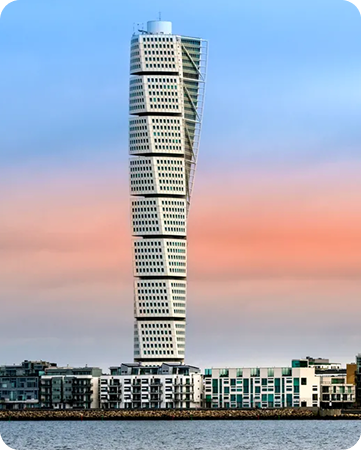
Sweden occupies a unique and compelling position in the landscape of international higher education. It is, simultaneously, one of the world’s most innovative and technologically advanced nations; one of the most progressive and socially equitable societies on earth; and the home of a higher education system that consistently produces graduates of exceptional quality and global competitiveness. For Pakistani students with aspirations in technology, engineering, sustainability, design, business, or the social sciences, Sweden offers an academic environment that is among the best – and most distinctive – available anywhere in the world. Sweden is home to internationally celebrated institutions including KTH Royal Institute of Technology (consistently ranked among the world’s top 100 universities in engineering and technology), Lund University (one of Scandinavia’s largest and most comprehensive research universities), Uppsala University (founded in 1477 and Sweden’s oldest university), Chalmers University of Technology, and the Stockholm School of Economics – each of which commands global respect in their respective fields. The concentration of world-class institutions in Sweden, relative to its modest population, is remarkable and it reflects the extraordinary national investment Sweden has made in research, innovation, and education as the foundations of its economic success. Sweden is also, by any reasonable assessment, one of the world’s most forward-thinking and innovation-friendly societies. It gave the world Spotify, IKEA, Ericsson, Volvo, H&M, and dozens of other globally recognized companies, and its startup ecosystem – centered in Stockholm but extending to Gothenburg, Malmö, and Linköping – is one of the most vibrant in Europe. For Pakistani students who aspire to careers in technology entrepreneurship, digital innovation, or sustainable business, studying in Sweden places them at the very epicenter of a culture that produces and celebrates precisely those ambitions. Read More

Academic Excellence at Lower Costs

Sweden charges tuition fees to non-EU international students, which represents a practical reality that Pakistani students must account for in their planning. Tuition fees at Swedish universities typically range from SEK 80,000 to SEK 145,000 per year (approximately USD 7,500 to USD 14,000), which – while not the lowest in Europe – is considerably lower than comparable programs at top-ranked institutions in the UK, the United States, or Australia. When the quality of the institutions involved is considered alongside the fee levels, Sweden offers a strong academic value proposition. Lund University’s English-medium offerings span engineering, social sciences, law, economics, and the natural sciences. The Swedish Institute Scholarship, moreover, provides full funding for a significant number of international students to pursue master’s degrees at Swedish universities each year.

Courses and Degrees Offered in English

Sweden offers one of the most extensive English-medium program catalogues in Europe. Virtually all Swedish universities offer a wide range of fully English-taught master’s programs, and the number of English-medium bachelor’s programs has been growing steadily. KTH alone offers dozens of English-taught master’s programs in areas like computer science, electrical engineering, machine learning, industrial engineering, sustainable energy, and materials science. Lund University’s English-medium offerings span engineering, social sciences, law, economics, and the natural sciences. For students whose ambitions lie in technology, engineering, or sustainability – sectors in which Swedish universities are globally pre-eminent – the breadth and quality of English-taught options is exceptional.

Affordable Living & Budget-Friendly Education

Stockholm is one of Europe’s more expensive capital cities, and Pakistani students must plan their finances carefully if they choose to study here. However, Swedish university cities outside Stockholm – including Lund, Gothenburg, Uppsala, and Linköping – offer a significantly more manageable cost of living while hosting excellent universities. A Pakistani student in Sweden can typically budget SEK 8,000 to SEK 11,000 per month, covering accommodation, food, transport, and personal costs. Student housing, prioritized for international students by most Swedish universities, is generally available and reasonably priced.

Scholarships

The Swedish Institute Scholarship for Global Professionals (SISGP) is one of the most generous and prestigious scholarship programs available to international students in Europe. It covers tuition fees, a monthly living allowance, travel grants, and insurance for one- or two-year master’s programs at Swedish universities, and is specifically designed for students from countries – including Pakistan – that are prioritized by Swedish development policy. The scholarship is highly competitive, but students with strong academic records, clear leadership potential, and well-articulated development goals are well-positioned to apply.

Internship & Industry Linkages

Sweden’s economy is driven by innovation, and its universities are deeply embedded in the industrial and entrepreneurial ecosystem that produces it. KTH’s proximity to Stockholm’s thriving technology sector, Chalmers’ deep integration with Gothenburg’s automotive and engineering industries, and Lund University’s connections to the Malmö-Copenhagen biotech and pharmaceutical cluster all translate into outstanding internship and placement opportunities for students. Major Swedish and multinational employers – including Ericsson, ABB, Scania, AstraZeneca, Sandvik, and Alfa Laval – maintain active university recruitment partnerships, and Swedish universities actively facilitate the connections between students and potential employers.

Why Choosing Finland Is the Best Choice?

FINLAND

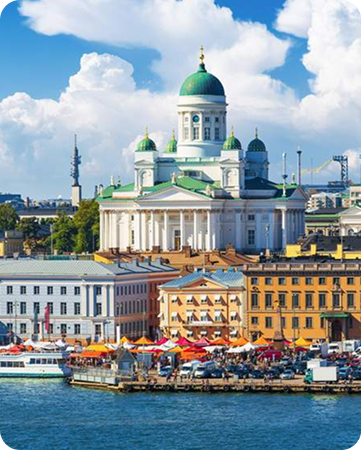
Finland is, in many respects, the world’s most remarkable educational success story, and for Pakistani students who are serious about the quality of their learning – not merely the prestige of their degree – it deserves very serious consideration. Finland’s education system is routinely rated the best in the world in international comparative assessments, reflecting a national philosophy that places learning, critical thinking, creativity, and the holistic development of the student at the absolute center. Finland is home to several internationally respected universities, foremost among them Aalto University – a relatively recent merger of three specialist institutions (Helsinki University of Technology, the Helsinki School of Economics, and the University of Art and Design Helsinki) that has rapidly established itself as one of Europe’s premier innovation and design universities. Finland’s particular strength – and its most distinctive offer to Pakistani students – lies at the intersection of technology, design, and sustainability. Aalto University’s unique model, which actively encourages cross-disciplinary collaboration between engineers, designers, and business students, is producing a generation of graduates who are equipped to address the complex, multidimensional challenges of the twenty-first- century economy. For Pakistani students who aspire to careers in technology innovation, sustainable design, digital services, or knowledge-based entrepreneurship, Aalto University is arguably one of the most exciting and relevant educational environments in the entire world. Read More

Academic Excellence at Lower Costs

Finland introduced tuition fees for non-EU international students in 2017, having previously offered free university education to all students regardless of nationality. Tuition fees at Finnish universities now typically range from EUR 4,000 to EUR 18,000 per year, depending on the institution and program – a level that, while a change from the previous free model, remains considerably lower than comparable institutions in the UK, the USA, or Australia. Finnish universities have also introduced scholarship programs specifically designed to offset tuition fees for high-achieving international students, ensuring that the shift to tuition fees does not entirely eliminate the financial accessibility that made Finland such an attractive destination.

Courses and Degrees Offered in English

Finland has made a substantial and deliberate investment in English-medium higher education, and the results are evident in the breadth and quality of English-taught programs now available. Aalto University offers numerous fully English-taught master’s programs in Computer Science, Information Networks, Data Science, Machine Learning, Industrial Engineering, Design, Creative Sustainability, and Business Technology – each of which represents a cutting-edge academic offering in fields of high global demand. The University of Helsinki offers English-medium master’s programs in life sciences, computer science, data science, and several social science disciplines.

Affordable Living & Budget-Friendly Education

Finland’s cost of living, while broadly comparable to other Nordic nations, is somewhat lower than that of Norway or Sweden, and significantly lower than that of the UK or the USA. Helsinki is Finland’s most expensive city, but it is considerably more affordable than Oslo, Stockholm, or Copenhagen. Pakistani students can typically budget EUR 800 to EUR 1,000 per month in Helsinki for accommodation, food, transport, and personal expenses, with costs somewhat lower in cities such as Tampere, Turku, and Oulu. Finland’s student union system provides students with access to subsidized meals, affordable accommodation, student discounts, and a rich social and cultural life that is both accessible and affordable. International students in Finland are permitted to work up to 25 hours per week during term time, providing a meaningful opportunity to supplement income and gain Finnish professional experience.

Scholarships

Finnish universities have developed a range of scholarship mechanisms to support international students, particularly in response to the introduction of tuition fees. Aalto University offers several scholarship tiers that can reduce or eliminate tuition fees for outstanding applicants, and admission to Aalto’s master’s program is inherently competitive and based on academic merit. The University of Helsinki similarly offers institutional scholarships for international master’s students. Finland’s Universities of Applied Sciences (AMKs) offer additional entry points into Finnish higher education with somewhat different fee structures and their own scholarship frameworks.

Internship & Industry Linkages

Finland’s technology sector – led globally by Nokia’s legacy, and today by a thriving ecosystem of technology startups, gaming companies (including Rovio and Supercell), and scale-up enterprises – provides a rich and dynamic internship environment for students at Finnish universities. Aalto University’s Start-up Sauna, one of Europe’s leading pre-accelerator programs, and the broader Otaniemi innovation campus environment place Aalto students at the heart of Finland’s entrepreneurial ecosystem. The University of Helsinki’s close ties to Finland’s life sciences, pharmaceutical, and public sector innovation landscape provide strong industry linkage for students in health, data science, and social policy. Finland’s commitment to digitalization – evidenced by its position as one of Europe’s most digitally advanced economies – means that students in computer science, data engineering, and digital services fields will find a job market that actively values and seeks precisely their skills.

Our partner Universities in Europe

Best Courses to Study in the Europe

Some of the best courses to study in the Europe include:

Your Trusted Partner for Studying in Europe

The prospect of studying in Europe – navigating its languages, its diverse university application systems, its scholarship landscapes, and its visa processes – can appear daunting without the right guidance. Career Advisor Service (CAS) has spent years developing the specialist knowledge, institutional relationships, and advisory expertise needed to make the European study abroad journey not merely manageable, but smooth, well-informed, and ultimately successful. Whether a Pakistani student’s destination is Germany, Norway, Sweden, or Finland, CAS provides the end-to-end support needed to turn a study abroad aspiration into a reality.

Personalized Country and University Selection
Europe's diversity of academic offerings, institutional cultures, and practical living environments means that the right destination is different for every student. CAS begins with a thorough, one-on-one assessment of each student's academic background, career goals, financial situation, language capabilities, and personal preferences, and builds a personalized shortlist of European universities and programs – across countries and institutional types – that represents the optimal strategic fit. We do not apply a generic formula; we develop a genuinely individualized strategy for each student we advise.
Image description
Application Support Across All European Systems
European university application systems vary significantly by country, institution, and program level. Germany's Uni-Assist platform, Sweden's Antagning portal, Finland's direct admissions processes, and Norwegian universities' own application systems each have their own requirements, timelines, and technical demands. CAS manages the entire application process on behalf of students – ensuring that every application is accurately completed, fully documented, and submitted within the relevant deadlines. Our familiarity with the specific requirements of institutions across Germany, Scandinavia, Sweden, and Finland gives our students a meaningful practical advantage.
Image description
SOP, LOR & Interview Preparation
European university applications – particularly at the master's and doctoral level – require high-quality statements of purpose, strong academic references, and, in many cases, interviews with faculty or admissions panels. CAS provides expert, iterative coaching on all written components of the application, working with students through multiple drafts to ensure that their motivational statements are authentic, specific, well-structured, and clearly aligned with the academic and professional goals of the program they are applying to. For programs requiring interviews, CAS conducts structured mock interview sessions that build both skills and genuine confidence.
Image description
Scholarship Research and Application Assistance
The European scholarship landscape – spanning DAAD scholarships for Germany, Swedish Institute scholarships for Sweden, Norwegian government programs, and Finnish university awards – is rich but requires careful research and well-prepared applications to access successfully. CAS conducts a comprehensive scholarship audit for every student, identifying all relevant funding opportunities and providing hands-on support with scholarship applications. We also advise students on HEC scholarships and other Pakistani government funding mechanisms applicable to European study, and help students construct integrated financial plans that maximize the resources available to support their studies.
Image description
Visa Assistance for Every European Destination
European student visa processes vary by country – Germany's student visa, Sweden's residence permit for students, Norway's student residence permit, and Finland's student residence permit each have their own requirements, processing timelines, and documentation standards. CAS provides comprehensive, country-specific visa guidance for every destination in our portfolio, ensuring that students understand exactly what is required, that their documentation is correctly assembled and presented, and that their applications are submitted with the precision that maximises approval prospects. We also prepare students for any required visa interviews and provide clear guidance on what to expect from immigration authorities at their destination country's consular office.
Image description
Pre-Departure to Post-Arrival Support
CAS understands that the transition to life in a new country – particularly one with a very different climate, cultural environment, and academic system – is one of the most challenging dimensions of the study abroad journey. Before departure, students receive comprehensive briefings on accommodation options, banking, health insurance, transport, cultural norms, and practical daily life in their destination country. After arrival, CAS remains a point of contact for students navigating the early weeks and months of their new life, available to provide advice, resolve concerns, and ensure that the transition to European student life is as smooth, confident, and positive as possible.

Image description

Europe is not a single destination – it is a continent of possibilities.

For young Pakistani students who are willing to look beyond the familiar and to invest in the very best academic experience their ambition and planning can access, Germany, Scandinavia, Sweden, and Finland collectively offer an educational landscape of extraordinary quality, remarkable diversity, and genuinely transformative potential.

The degrees earned at European universities are respected across the world. The professional networks built on European campuses span every continent and every industry – but that every graduate will carry with them for the rest of their professional life.

Career Advisor Service (CAS) is here to make that experience yours. From your first enquiry to the moment you arrive on campus, our team will be with you at every step of the way – informed, committed, and dedicated.

Required Documents for a Europe Study Visa

Before applying for a Europe study visa, it’s essential to prepare the necessary documents to avoid delays in your application

Official academic documents

Bank Statement

Letters of recommendation

Updated resume/CV

Passport copy